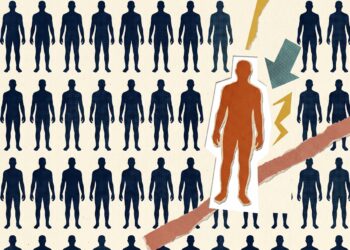
Picture a project team that has quietly fractured into two camps. Maybe half the group sits on one floor and half sits on another. Maybe they were hired in different waves, or they compete for the same bonus. Whatever the reason, information now flows within each camp but rarely across the divide. When the team finally sits down to brainstorm, the ideas feel thin. What can a manager actually do once this kind of split has already taken hold?
A study published in the Journal of Applied Social Psychology offers evidence that the answer may depend on what a leader chooses to emphasize. The researchers found that teams divided into subgroups tended to produce more creative work when a leader focused on relationships and a shared identity, rather than on tasks and goals.
The problem with teams that split apart
Teams tend to do their best creative work through a process researchers call information elaboration. This is the open exchange, discussion, and combining of different ideas and perspectives. When members share what they know and challenge one another, a broader pool of raw material becomes available, and new ideas can emerge from unexpected combinations.
The trouble is that people naturally sort themselves into “us” and “them.” When members split into subgroups, information starts to circulate inside each camp instead of across the whole team. This tends to bring biases, distrust, and conflict, and it limits the exchange that fuels creativity. Prior research links subgrouping to lower team trust, more conflict, and even emotional exhaustion for individuals.
Christoph Reinert of Kiel University in Germany, working with Claudia Buengeler of Kiel and Astrid C. Homan of the University of Amsterdam, wanted to know what leaders can do once this splitting has already happened. Much earlier research asked how leaders might prevent subgroups from forming. But splits often arise from factors outside a leader’s control, such as where people sit or how they are paid. The team wanted to test how a leader should respond after the divide appears.

Two kinds of leadership
The researchers drew a distinction that has a long history in leadership research. Relationship-focused leadership targets a team’s social and emotional needs by encouraging respect, equal participation, and a sense of shared identity. Task-focused leadership targets the work itself, by clarifying goals, defining roles, monitoring progress, and holding people accountable.
Their central argument, built on a model of leading diverse teams, rests on a matching idea. A team torn into subgroups has a relationship problem, so it may need a leader who tends to those relationships. The authors reasoned that relationship-focused leadership would strengthen team identification, meaning members’ emotional attachment and sense of belonging to the team as a whole. Stronger identification, in turn, would make members more willing to share and combine ideas across the old dividing lines, which would show up as more creative output. A task-focused leader, by contrast, might simply overload a fractured team with instructions that do nothing to repair the underlying rift.
Testing the idea inside an escape room
To study this, the researchers built an unusual setting: an indoor live escape room at a German university. Escape rooms are games where players cooperate to solve puzzles and “escape” a themed space. The design let the researchers keep tight experimental control while giving participants a realistic task involving problem-solving, communication, and dependence on one another.
Between October 2022 and March 2023, 103 teams took part, made up of 731 individuals drawn from students and employees. Team sizes ranged from four to ten people. The researchers randomly assigned teams to conditions in a design that varied two things: whether subgrouping was pushed higher or lower, and whether the leadership message was relationship-focused or task-focused.
To create subgroups, the researchers split each team into two groups that entered separate, mirror-image, sound-isolated rooms. In the higher-subgrouping condition, they layered on several nudges drawn from classic social-psychology methods: the two groups wore different colored jackets, competed for a financial reward given to the best-performing subgroup, and were asked to invent their own group name and motto. In the lower-subgrouping condition, everyone wore the same color, competed for a reward shared by the whole team, and created a single team name before being split.
The groups solved puzzles in their separate rooms, with a few puzzles requiring coordination between the two rooms through a text chat. After about 35 minutes, the whole team reunited in a final room. There, a recorded voice delivered the leadership message as part of the game. The relationship-focused version urged members to treat one another with kindness and respect and stressed a shared team identity. The task-focused version emphasized structure, objectives, and accountability. Both lasted about the same length.
Rather than rely only on a survey asking people how divided they felt, the researchers measured subgrouping through behavior. They counted the number of characters each team typed in the chat between the two rooms. Teams in the higher-subgrouping condition sent fewer messages across the divide than those in the lower-subgrouping condition, consistent with the idea that when people identify with a subgroup, they communicate less with the other side. The researchers used this chat activity as their continuous measure of how divided a team actually was.
Finally, in the reunited room, teams completed a creativity task. They had five minutes to list as many alternative uses for a cable as they could. The researchers scored creativity by counting how many distinct categories of ideas each team generated, such as sports, art, or tools. Ideas ranged from a jump rope to a garland to a lasso.
What the data showed
The results lined up with the researchers’ predictions. Among teams that were more divided, meaning they communicated less across the two rooms, the relationship-focused message was linked to stronger team identification than the task-focused message. Among teams that were less divided, the type of leadership message made little difference to identification.
From there, the chain continued. Stronger team identification was linked to more information elaboration, the open exchange and integration of ideas. And more information elaboration was, in turn, linked to higher creativity on the cable task.
Put together, the analysis suggests a pathway: for teams experiencing higher subgrouping, relationship-focused leadership was tied to greater identification, which was tied to more idea-sharing, which was tied to more creative output. The authors report that this full indirect effect on creativity sat at the border of statistical significance, so they describe it as a small effect rather than a strong one. The links between identification, elaboration, and creativity were clearer.
One finding the authors highlight is that even a brief recorded statement, not a live manager building relationships over weeks, was enough to move team identification in divided teams. They interpret this as consistent with the idea that giving a team a common identity can help it bridge internal divides.
What it might mean for managers, and what to keep in mind
The researchers suggest some practical takeaways, while cautioning that a short, one-shot recording in a lab cannot capture the messy, back-and-forth nature of real leadership. Their reading is that when a team has already fractured, emphasizing shared goals, common values, and a collective identity may do more good than piling on task instructions. They also argue that the benefits of relationship-focused leadership extend beyond feelings: by rebuilding social bonds, it may indirectly unlock the idea-sharing that drives good work.
They add a warning that cuts the other way. Because their manipulation showed that fairly ordinary features can create divides, leaders should be mindful that their own choices, such as assigning different uniforms, separating teams across locations, or rewarding subunits rather than the whole team, might unintentionally push a group into camps.
Several caveats are worth keeping in view. This was a laboratory game, not a workplace, and the leadership “message” was a recording. A post-game check found that many participants misremembered which subgrouping condition they had been in, which the authors attribute partly to how absorbing and complex the experience was; they lean on the behavioral chat data instead. And the creative task, listing uses for a cable, is a standard research measure but a narrow slice of what creativity looks like on the job. The findings offer a suggestive picture of how leaders might reunite a divided team, rather than a settled prescription.