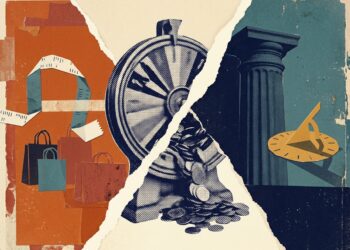
Imagine scrolling through your phone late at night when a jacket pops up in your feed. A banner warns that a flash discount ends in two hours, only a few items remain in stock, and half your friends seem to be wearing something similar. You buy it on the spot, only to feel a sinking wave of regret when the package arrives and the jacket sits untouched in your closet.
Scenarios like this rely on the fear of missing out, widely known as FOMO, a staple of modern retail advertising. A study published in Business Horizons examined what happens after FOMO-prone shoppers hit the checkout button. The researchers found that while these promotions often succeed in sparking quick sales, they frequently leave buyers feeling dissatisfied, guilty, or regretful. Even so, roughly half of the behavioral responses shoppers reported were still positive toward the brand, pointing to a complicated relationship between buyer’s remorse and customer loyalty.
Looking beyond the immediate sale
Businesses routinely use countdown timers, flash sales, low-stock alerts, and influencer endorsements to create urgency. Until recently, however, marketing research paid relatively little attention to how shoppers evaluate these purchases once the initial rush wears off, or how those experiences shape their long-term actions toward a company.
To investigate this gap, Nada Morsi of the Arab Academy for Science, Technology, and Maritime Transport in Alexandria, Egypt, worked with colleagues Elisabete Sá and Joaquim Silva at the University of Minho in Portugal. The team set out to identify which FOMO triggers have the strongest pull, what kinds of buying decisions they encourage, and how shoppers think, feel, and act afterward.
Psychologists originally described FOMO as a general worry that others are having more rewarding experiences. In a marketing context, the authors propose defining it more specifically as a temporary state of anxiety stirred up by persuasive sales tactics, creating unease over missed opportunities and prompting unusual shopping habits. Because these appeals are linked to impulsive, compulsive, and conformity-driven buying, the researchers argue that FOMO marketing can be viewed as an ethically debatable practice that puts short-term sales ahead of consumer well-being.
Tracing the FOMO shopping journey
Because postpurchase reactions to FOMO marketing have rarely been mapped in detail, the team used a qualitative approach called the Critical Incident Technique. In this method, interviewers ask participants to recall specific, memorable events from their own lives and walk through what happened step by step.
The researchers conducted semistructured telephone interviews with 57 consumers in Egypt who showed a tendency to make FOMO-driven purchases. Participants were recruited from the researchers’ Instagram followers to encourage candid conversation. The team selected Egypt in part because previous studies suggest FOMO tends to be stronger in collectivist cultures, where people often define their identity in close connection to social groups and peers.
Across the 57 interviews, participants described 87 specific FOMO-triggered purchase incidents. Of those, 61 were negative experiences and 26 were positive. The authors analyzed these stories across three stages: the marketing trigger that sparked the purchase, the type of buying decision made, and the thoughts, emotions, and actions that followed.
Discounts, regret, and an unexpected split in loyalty
When the researchers tallied what pushed shoppers to buy, sales promotions came out far ahead of other tactics. Promotional offers accounted for 52.9% of all incidents, mostly through price discounts (39 incidents) and buy-one-get-one-free deals (7 incidents). Trend appeals ranked second at 26.4%, driven more often by family and friends (17 incidents) than by social media influencers (6 incidents).
Scarcity appeals, such as limited stock or ticking clocks, accounted for 20.7% of incidents, though they often carried more weight when paired with a discount. Scarcity also appeared closely linked to buying in excess, with one participant recalling, “I bought immediately three, not just one, as I was afraid they might go out of stock again.”
Almost all of the resulting purchases, 95.4%, were described by participants as irrational. Impulsive buying made up 69% of the incidents, compulsive buying accounted for 21.8%, and buying simply to fit in with a trend made up 4.6%. Only four incidents involved calculated, rational shopping, and those buyers generally felt satisfied with their choices.
Overall, however, dissatisfaction dominated the aftermath. In 75.9% of the incidents, shoppers expressed negative thoughts about their purchase, often questioning their own judgment after buying an unnecessary item or discovering that a product performed poorly. Emotionally, 66.4% of the feelings participants reported fell into the sadness category, centered on guilt, shame, disappointment, and regret. Even when a purchase sparked initial excitement, that buzz frequently faded once the novelty wore off.
Standard marketing theory would predict that unhappy buyers abandon the brand. In nearly half of the reported behavioral responses (49.2%), that is what happened: shoppers vowed not to buy again, warned others away, pledged to be more cautious, or unfollowed influencers they no longer trusted. Yet in 50.8% of the behavioral responses, participants still intended to buy from the company again or recommend it to others, even when they regretted their own purchase.
Four types of dissatisfied FOMO shoppers
To make sense of that contradiction, the researchers focused on the dissatisfied shoppers, who accounted for roughly three-quarters of the incidents. Based on whether these unhappy buyers planned to repurchase from the brand or recommend it to others, the team sorted them into four distinct groups.
The largest group, making up 47.4% of the dissatisfied assessments, were what the researchers called Butterflies. After feeling let down by an impulse purchase, Butterflies walked away. They avoided making similar purchases from the brand, looked for competitors, and actively shared negative word of mouth.
The second largest group, at 32.9%, were Devotees, who continued to buy from and recommend the brand despite their dissatisfaction. The researchers divided this group into two subtypes. Contented Devotees (7.9%) questioned their own spending or timing, yet still felt positive emotions about the item itself.
Unhappy Devotees (25%) felt both dissatisfied and sad, yet forgave the company anyway, often pointing to past positive experiences or admiration for the brand. “I believe I shouldn’t have gotten the bag. I actually wore it once, and it wasn’t cheap,” one participant said. Even so, that shopper planned to keep buying from and recommending the brand because of its designs.
A third group, Endorsers (10.5%), decided not to buy the product again themselves after feeling disappointed, yet remained willing to recommend it to friends or family if they thought it suited someone else’s needs or budget. Finally, Shopaholics (9.2%) refused to recommend items they saw as a waste of money, yet kept returning to the same brand whenever another sale or scarce item appeared. Describing the cycle, one participant noted, “every time I tell myself that maybe this time is different.”
The authors interpret the behavior of Devotees, Endorsers, and Shopaholics as a warning sign. When dissatisfied shoppers continue to reward a company with repeat business or referrals, the researchers suggest, the brand avoids commercial penalties while the consumer absorbs the emotional and financial toll alone.
Takeaways for marketers, shoppers, and study limitations
For business leaders, the findings point to a clear tradeoff. While FOMO appeals can boost short-term sales and some regretful shoppers will still stick around, nearly half of dissatisfied buyers fit the Butterfly profile and may walk away while voicing complaints on social media. The authors argue that companies should shift toward what they call “well-being marketing,” which weighs customer happiness alongside profit.
Specifically, the researchers recommend that marketing managers use promotions transparently, provide clear product information and reviews to support informed choices, and extend return or exchange windows to help ease postpurchase regret. They also suggest evaluating marketing campaigns not only on immediate clicks and sales, but also on how customers feel after the product arrives.
For consumers and advocacy groups, the authors outline practical steps to build resistance to urgency tactics. These include practicing mindfulness to reduce social comparison, setting self-control guardrails like limiting online browsing time or paying with cash, and pausing before checkout to imagine how a purchase might feel weeks later. The researchers also point to public messaging that promotes the “joy of missing out,” or JOMO, as a healthier alternative to keeping up with every trend.
Several limitations should be kept in mind when reading these results. The study relied on a relatively small, nonrandom sample of 57 consumers in Egypt who were recruited from the researchers’ own Instagram followers, so the exact breakdown of shopper types might look different in other countries or among less socially connected consumers. Because the interviews asked people to recall past purchases from memory, participants’ accounts could be shaped by hindsight, and the qualitative design cannot prove direct cause and effect. Even with those caveats, the research offers a closer look at why the rush of catching a deal can leave lasting mixed feelings long after the sale ends.