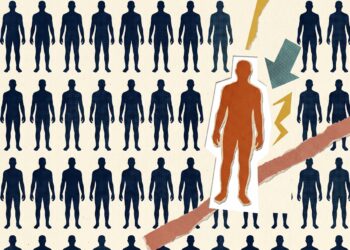
Picture a team meeting where a manager visibly tenses up while discussing a project setback. A junior team member notices and says, “You seem frustrated about how this is going.” That small act of naming someone’s emotion is rare in workplaces, and rarer still when it flows upward from a subordinate to a boss. New research suggests that when it does happen, teams work better.
A study published in Organizational Behavior and Human Decision Processes examines who acknowledges whose emotions in work teams, why the pattern skews the way it does, and what happens when employees break the mold by naming their boss’s feelings out loud.
The question behind the research
Prior research has established that “emotional acknowledgment,” a term researchers use for the simple act of verbally recognizing someone else’s emotional state without judging it, tends to strengthen relationships and improve outcomes. Statements like “You seem excited about this” or “That must have been tough” fall into this category. Yet studies have found that people acknowledge others’ emotions only about a quarter of the time in workplace interactions.
Christina M. Bradley of Boston College’s Carroll School of Management and Lindred L. Greer of the University of Michigan’s Ross School of Business wanted to understand why this beneficial behavior is so scarce, and whether its distribution across a team follows a predictable pattern. Their hunch was that hierarchy plays a big role: employees might feel unspoken rules about who is allowed, or expected, to comment on whose feelings.
The researchers use the concept of “prescriptive norms,” which are shared beliefs about what people are supposed to do in a given situation, even without formal rules. Their argument is that in most organizations, bosses are expected to attend to their subordinates’ emotions as part of the managerial role, while subordinates are quietly discouraged from doing the same thing in reverse.
Three studies, three angles
The team ran three preregistered studies to test their ideas. The first was an online experiment with 340 full-time working adults recruited through Prolific. Participants were randomly assigned to think about acknowledging the emotions of a boss, a peer, or a subordinate, and then answered questions about how likely they would be to do so and how strongly they felt it was expected of them.
The pattern that emerged was consistent. Participants reported being less likely to acknowledge the emotions of higher-ranked colleagues than those of peers or subordinates. They also reported perceiving weaker expectations to do so when the target was above them in the hierarchy. When the researchers tested a range of alternative explanations, including relationship closeness, how often they saw the person express emotions, how deserving the person seemed, and how task-focused the relationship was, none of these accounted for the effect the way perceived norms did.
The second study moved into the field. The researchers recruited 137 employee-leader pairs at a large Midwestern university and surveyed them across two time points during the same week. The first survey measured perceived norms; the second, sent three days later, measured actual emotional acknowledgment behavior. The findings held: employees reported weaker norms and less frequent upward acknowledgment than their bosses reported downward. An exploratory finding also emerged. Employees who themselves supervised others (middle managers with bosses above them) perceived stronger expectations to acknowledge their own boss’s emotions and reported doing so more often. Having direct reports appeared to be linked to greater sensitivity toward the emotional state of higher-ups.
What happens when subordinates break the pattern
The third study was designed to test what happens when lower-ranked members go against the grain. Bradley and Greer ran a laboratory experiment with 191 three-person teams (573 participants) at a Midwestern university. Each team was assigned a leader and two followers and given a 20-minute negotiation task with monetary bonuses for high-performing teams and individuals.
Teams were randomly assigned to one of three conditions. In one, the two followers were instructed to acknowledge their leader’s emotions during the discussion. In another, they were told not to. In a third control condition, no instructions were given about emotional acknowledgment at all.
The researchers measured how much the leader acknowledged the followers’ emotions in return, and they measured team performance based on the joint point total the team achieved on the negotiation, which ranged from 1,350 to 1,650 points.
Teams in which followers acknowledged the leader’s emotions saw leaders reciprocate. Those leaders engaged in more downward emotional acknowledgment than leaders in either of the other conditions, including the control group where no instructions were given. Notably, the control condition and the “don’t acknowledge” condition produced nearly identical results, suggesting that in the absence of explicit prompting, followers rarely acknowledge their boss’s emotions at baseline.
Team performance followed the same pattern. Teams where followers acknowledged the leader’s emotions scored higher on the negotiation task, and this improvement was linked to the increased downward acknowledgment from the leader that followed.
Why the reciprocation matters
The researchers interpret the reciprocation through the lens of what social scientists call the norm of reciprocity: when someone does something for you that goes beyond what’s expected, you feel a stronger pull to return the favor than if they had merely met expectations. Because acknowledging a boss’s emotions is not something followers are typically expected to do, when they do it anyway, it registers as a voluntary gift rather than a routine behavior. Leaders, in turn, respond with their own above-baseline attention to team members’ emotional states.
Bradley and Greer argue that this back-and-forth can shift the emotional culture of the team. When both directions of acknowledgment exceed what norms dictate, teams may develop more open communication, deeper information sharing, and a stronger sense that members feel seen. The authors point to this as one plausible route by which the performance gains occur, though the study measured performance directly through the negotiation outcome rather than tracking every intermediate step.
Caveats and limits
A few important caveats accompany the findings. The field study relied on employees inviting their own bosses to participate, which likely skewed the sample toward pairs with reasonably positive relationships. The laboratory experiment used student and staff participants in an artificial negotiation task, so it remains an open question how the dynamics play out in longer-term, higher-stakes workplace teams.
The authors also raise a cautionary point in their discussion. They stress that their findings should not be read as an argument that employees ought to be obligated to manage their bosses’ feelings. Placing that expectation on people with less power could create its own problems. The more useful question, they suggest, is how organizations might create environments where upward emotional acknowledgment feels safe and natural rather than risky or presumptuous.
The researchers also tested whether factors like the accuracy of the acknowledgment, the valence of the emotion being acknowledged (positive versus negative), or the strength of the leader-follower relationship changed the effects. None of these appeared to shift the outcomes in their data, though they note this contrasts with some earlier research and merits further investigation.
One practical takeaway the authors highlight: the widespread belief that emotional expression is unprofessional may be doing quiet damage to team performance. Challenging that assumption, particularly for managers who want to unlock more engaged team dynamics, could be a starting point.