Business News
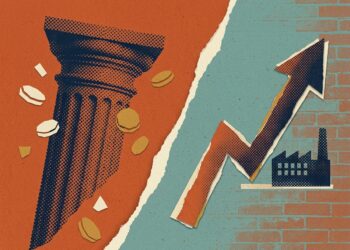
Fiscal news becomes inflationary only under one condition, study finds
A survey experiment with 7,000 German firms shows that pessimistic news about French, Italian, and Spanish debt raises inflation expectations, but only among firms that already distrust the ECB.
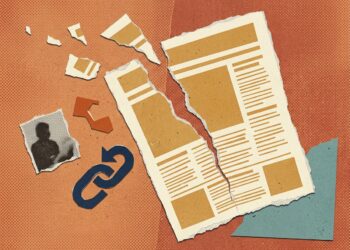
Costly content, cheap imitation, and the incentive problem for AI platforms
A Harvard economist models what happens when AI chatbots answer questions instead of sending readers to the sources that produced the information, and finds a self-reinforcing mechanism that can quietly starve costly reporting and research.

When Bitcoin miners race and lose: the hidden energy cost of near-simultaneous wins
Researchers at University College London built a model of how Bitcoin's mining collisions arise, linking network delays and power concentration to wasted electricity totaling roughly 16,000 megawatts in a single year.

The networking blind spot that could be holding back your next big product
A study of Dutch firms finds that a moderately connected business network is linked to the best odds of launching new products, while both sparse and overly dense webs tend to fare worse, especially when partners hold very...
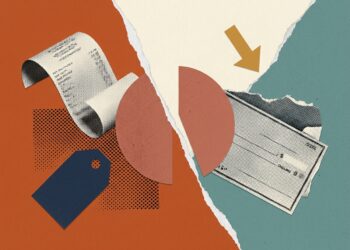
Did voters punish inflation or pay cuts? A county-by-county look at the 2024 election
A new working paper finds that falling real wages, not inflation itself, tracked with Republican gains in 2024. Once wages are accounted for, high-inflation counties actually shifted less toward Trump.

New study shows how a single hot week causes a delayed economic slump
Weekly U.S. data show that a hot week produces a brief economic bump, then a slow slide that lasts more than a year, with labor markets driving most of the decline.
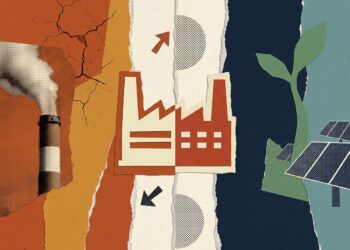
Why some companies fight climate rules while their rivals push for them
Why do carmakers in the same industry lobby on opposite sides of climate policy? A Princeton study of 11,705 firms finds the answer lies in how each company perceives climate change as opportunity, regulation, or physical threat.
California’s $20 fast-food wage: mobile phone data reveals staffing cuts started before the law took effect
Mobile phone location data suggests California fast-food restaurants cut on-site staffing by about 8 percent after the $20 wage was announced, with reductions starting months before the law took effect.

What the 2021–2024 unauthorized immigration boom did to U.S. jobs, rents, and welfare spending
A new Dallas Fed working paper uses administrative microdata to measure how the 2021–2024 surge in unauthorized immigration affected local U.S. labor markets, housing prices, and government transfer spending.

Online stores do not fully replace closed bookshops, study finds
When a German bookstore closes, monthly print sales drop by about 744 copies, and online retailers do not pick up the slack. A new study finds physical and digital book channels are imperfect substitutes.