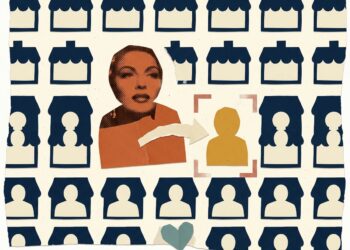
Scroll through Instagram and you will likely pass a few faces that never existed. Virtual influencers are computer-generated personas with polished feeds, followers, and brand deals, built to look and act like real people. Brands like them because they never sleep, never age, and never cause a public scandal. But do shoppers respond to them the same way they respond to a flesh-and-blood person recommending a product? And does it matter whether the product actually fits the influencer’s image?
A study in the Journal of Global Scholars of Marketing Science takes on those questions. The research offers evidence that the same marketing principle can work through different psychological routes depending on whether the endorser is human or artificial.
The question behind the research
Marketers have long known that a good match between an influencer and a brand tends to help. When a fitness coach promotes a protein shake, the pairing feels natural and shoppers respond more warmly than they would to an awkward mismatch. Researchers call this “influencer-brand congruence,” the perceived fit between an influencer’s persona and a brand’s image, personality, and audience.
Most of that earlier work assumed the influencer was a real human being. Md Abdul Alim of Griffith University in Australia and his colleagues wanted to know whether the fit principle holds up when the endorser is not a person at all. Their starting point was that people may process virtual influencers differently, and that difference could change how congruence does its job.
To frame the puzzle, the authors lean on two ideas. The first, congruity theory, holds that people prefer consistency in their evaluations, so a well-matched influencer and brand feels coherent and persuasive. The second, mind perception theory, splits how we perceive minds into two parts: “agency,” the capacity to plan and act, and “experience,” the capacity to feel emotions and have inner states. Humans are generally seen as having both. Virtual influencers may be seen as having agency, since they are clearly designed with intent, but shoppers know their emotions are programmed rather than lived. That gap in perceived “experience,” the researchers propose, is central to how people judge whether an endorsement feels genuine.

How the studies were built
The team ran two randomized experiments recruited through Prolific, an online platform for research participants. In each study, people were shown a fictitious Instagram post and randomly assigned to one of four versions: the influencer was either human or virtual, and the product was either a good fit or a poor fit for that influencer’s stated expertise.
In the first study, 394 participants saw a post from a nutrition expert. In the matched version, the influencer promoted a juice product; in the mismatched version, the same influencer promoted a technology product. Participants then rated how likely they would be to like, share, comment on, or tag friends in the post. This served as a self-reported measure of engagement.
The second study, with 401 participants, added new product categories such as travel and financial services, and swapped the self-reported measure for something closer to real behavior. Participants were offered a clickable link to a brand’s homepage. Whether they clicked or not became the study’s engagement measure, a “click-through” proxy that captures action rather than stated intention. This study also measured perceived authenticity, using items about whether the influencer had a “true passion” for the brand and was “devoted” to what she did.
Before analyzing results, the researchers checked that their manipulations worked. Participants did rate the matched posts as more congruent, and they reliably identified the human and virtual influencers as intended.
What the analysis revealed
The first study produced a clear pattern. On its own, congruence did not move engagement much. What mattered was the combination of fit and influencer type. When the influencer was human, a good brand match led to noticeably higher engagement than a poor match. When the influencer was virtual, that boost largely faded. In plain terms, human influencers benefited directly from promoting a product that suited them, while virtual influencers did not get the same lift from fit alone.
The second study looked underneath that result to trace how the effect traveled, and it turned up a twist. Across the board, a good brand match raised perceptions of the influencer’s authenticity, and higher authenticity was linked to more click-throughs. But the path from congruence to authenticity to engagement was stronger for virtual influencers than for human ones.
The researchers interpret this as authenticity playing a “compensatory” role for artificial endorsers. Because shoppers may start out doubting whether a computer-generated persona can be genuine, a well-matched brand partnership gives them a signal of coherence and sincerity that they otherwise lack. For human influencers, the authors argue, perceived authenticity sits at a relatively stable baseline thanks to their assumed lived experience, so a good brand match adds less on that front.
Put together, the two studies suggest that congruence works through two different routes. Human influencers seem to gain engagement fairly directly when the brand fits. Virtual influencers lean more heavily on that fit to earn a sense of authenticity, which in turn drives the clicks.
What it might mean for marketers
The authors draw several practical suggestions from their findings, while framing them as guidance rather than guarantees. They argue that brand fit should be treated as an early screening step in choosing any influencer, not an afterthought, and they propose a structured “fit audit” that weighs thematic consistency, shared values, and past endorsements before a partnership is signed.
For virtual influencers in particular, the researchers suggest that fit carries extra weight. Because these personas may face doubt about their sincerity, they recommend investing in coherent backstories, consistent value narratives, and a selective roster of brand deals that reinforce plausibility. Human influencers, by contrast, may gain from long-term collaborations that reinforce an already-stable sense of authenticity.
A few caveats deserve attention. Both studies used fictitious posts in a controlled setting, so the click on a dummy link may reflect curiosity or task attention rather than the kind of engagement that unfolds naturally on a real feed. The authors acknowledge this and note that congruence in their design meant professional fit between an influencer’s stated expertise and a product, one of several possible ways fit could be defined. They point to richer measures, such as actual purchases or field experiments, as directions for future work.
Still, the research reframes a familiar marketing question. The choice is not simply human versus virtual, the authors suggest, but how brand fit and authenticity cues are tuned to fit each type. As synthetic faces keep multiplying across social feeds, understanding those distinct routes to engagement is likely to stay relevant.