Neuroeconomics

When Bitcoin miners race and lose: the hidden energy cost of near-simultaneous wins
Researchers at University College London built a model of how Bitcoin's mining collisions arise, linking network delays and power concentration to wasted electricity totaling roughly 16,000 megawatts in a single year.

What a brainwave headset revealed about why some traders make money and others don’t
Researchers put wearable EEG headsets on 16 professional day traders during real, high-stakes trading. Brief spikes in neural engagement before a trade predicted better outcomes; steady all-day alertness did not.

The “perfect” AI face may be turning shoppers off
As AI-generated hosts flood shopping livestreams, new research suggests the facial traits humans find beautiful in each other can backfire on machines. A flawless synthetic face may signal fakeness, while subtle asymmetry can boost engagement.

A Chicago economist links decades of interest-rate movements to public memory
A working paper finds that decades-long swings in real interest rates across the U.S., Germany, U.K., and Japan track slow-moving inflation expectations shaped by what people have personally lived through.

New study shows how a single hot week causes a delayed economic slump
Weekly U.S. data show that a hot week produces a brief economic bump, then a slow slide that lasts more than a year, with labor markets driving most of the decline.
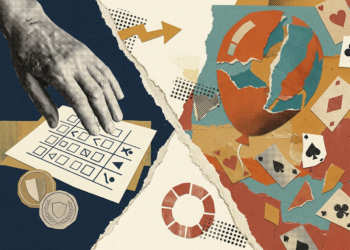
Do we really get more cautious with money as we age? It depends on how you ask
Do people really grow more cautious with money as they age? A meta-analysis of 46 studies finds the answer hinges on how researchers measure risk, with surveys and psychological games telling opposite stories.
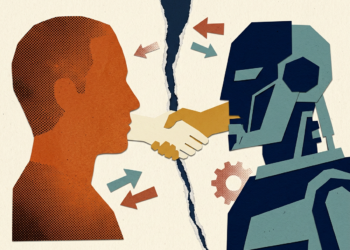
A lab experiment reveals a hidden bias against artificial agents
People cooperated with machines and humans alike in one-shot games, but in repeated play they exploited artificial agents more, defecting even when they expected the machine to cooperate, a new lab study finds.
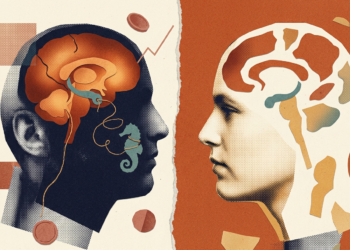
What brain scans reveal about the gender gap in financial risk-taking
Why do women tend to take fewer financial risks than men? A brain-imaging study offers evidence that a link between emotion, numbers, and future-thinking regions relates to caution in women, but not men.
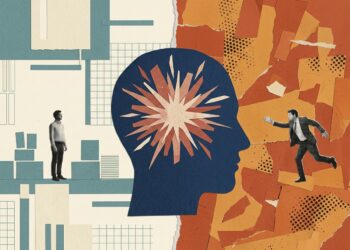
A study asked what makes Gen Z employees adaptable. Here’s what it found
A study of 270 young workers finds that creativity and problem-solving predict workplace adaptability better than memory or attention, with the most useful skills shifting between start-ups and established firms.

The genetic lottery weighs in: An extra year of school appears to boost earnings by 8%
Using random genetic variation as a stand-in for a controlled experiment, researchers estimate that one extra year of schooling raises earnings by about 8% in Norway, higher than conventional methods suggest.