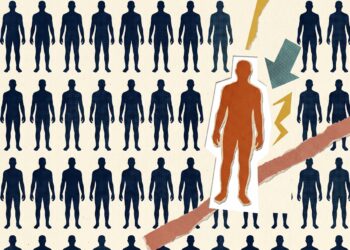
Picture a workplace where a promotion opens up. The most eager candidate steps forward, confident and quick to describe their people skills. The company hands them the job. A year later, the team is struggling. What went wrong, and could the company have spotted the problem before it started?
A team of economists set out to answer a version of this question by building a way to measure management talent from scratch. Their work, published in the Quarterly Journal of Economics, offers evidence that the people most eager to lead are often not the best choices, and that a specific type of decision-making skill predicts who will succeed.
The problem with studying managers
Economists have long known that good management matters for how firms perform. The trouble is figuring out who counts as a good manager in the first place. In the real world, managers are almost never assigned to teams at random, so it is hard to separate a manager’s contribution from the quality of the people they happen to oversee. Existing managers are also a self-selected group, which can distort conclusions about what makes someone effective.
There is even a well-known trap called the Peter principle, which holds that people get promoted based on how well they did their old job until they reach a role they cannot handle. A great salesperson, in other words, may make a poor sales manager, yet firms keep promoting on past performance anyway.
Ben Weidmann of University College London and the London School of Economics, along with colleagues from institutions including Harvard, the University of Gothenburg, and the University of Warwick, designed an experiment to sidestep these problems. Their central idea was to take the messy real world out of the equation by randomly assigning managers to teams, over and over, and measuring what each manager consistently added.
Building a management test in the lab
The researchers recruited 555 participants and formed them into three-person teams, each with one manager and two workers. Before the group work began, everyone completed individual assessments measuring three broad skills: fluid intelligence (the ability to solve novel problems), emotional perceptiveness (reading emotions from photographs of people’s eyes), and something called economic decision-making skill, which measures how well a person allocates limited attention across a demanding numerical task.
The teams then worked on a custom-built group task with three types of problems: numerical, spatial, and analytical. The catch was that the team’s score was set by its weakest area, so success depended on coordination. The manager decided who worked on what, monitored progress, and tried to keep everyone motivated. Only the manager could see the overall team score, so they had to talk with teammates to figure out where the team was falling behind.
Here is the part that made the measurement work. Each manager was randomly assigned to four different teams. By controlling for how skilled the workers and manager were as individuals, the researchers could isolate what the manager alone added. A good manager, in this setup, was someone whose teams consistently produced more than the sum of their parts.
The experiment had a second layer. In half the lab sessions, the manager role went to whoever expressed the strongest desire for it, on a scale of 1 to 10. In the other half, managers were chosen by lottery. This let the researchers directly compare people who wanted the job against people picked at random.
What the experiment revealed
Managers turned out to matter a great deal. A one standard deviation increase in manager quality improved team performance by about 0.22 standard deviations after accounting for everyone’s individual skills. Put another way, the quality of the manager mattered roughly as much to team output as the combined productive capacity of the workers.
The comparison between eager and random managers produced a result that runs against common intuition. Teams led by self-promoted managers performed about 0.1 standard deviations worse than teams led by randomly assigned managers. That gap, the authors note, is roughly what you would expect from swapping in a manager with a full standard deviation lower IQ score.
Why would people who want the job do worse? The researchers point to overconfidence, especially about social skills. People who wanted to manage tended to overestimate how well they could read others’ emotions when measured against the actual test. Among self-promoted managers, those who rated their own people skills highest tended to perform worse. Randomly chosen managers showed no such pattern.
When the researchers looked at what actually predicted strong management, two things stood out among the lottery managers: fluid intelligence and economic decision-making skill. Demographic traits, personality, education, work experience, and emotional perceptiveness did not strongly predict who would be a good manager. These results held up across a range of statistical controls.
Testing the findings outside the lab
A lab is not a workplace, so the team ran two validation studies. First, they tracked down public LinkedIn profiles for 73 of their lab participants, all early in their careers. Participants who scored higher as managers in the lab received more real-world promotions. A one standard deviation increase in lab management performance was associated with 0.16 more promotions per year, against a base rate of 0.25. This link held even after accounting for intelligence, age, gender, and personality.
Second, they studied 225 store managers at a large South American grocery chain, linking skill assessments to 28 months of sales data. Because the company routinely rotates managers between stores for administrative reasons, the researchers could use those moves as a rough real-world version of their random-assignment design.
The effect on sales was large. The arrival of a manager one standard deviation above average was associated with a 25 percent jump in annual per-store sales, or about US$4.1 million. And once again, the strongest predictor of a manager’s performance was the same economic decision-making test that stood out in the lab. Good managers were also better at avoiding inventory stockouts, which fits the finding from the lab that strong managers excel at monitoring.
What good managers actually do
The researchers broke management down into three activities: matching workers to tasks that fit their skills, monitoring to make sure no one wastes effort, and keeping people motivated. All three mattered, but monitoring and motivation carried the most weight. In the lab, good managers made monitoring errors about half as often as others.
What it might mean for hiring
The authors argue that firms could improve management quality by screening candidates on skills rather than waiting for people to volunteer or promoting on past job performance. They suggest a short assessment of economic decision-making skill as a low-cost option, and they note that companies might benefit from actively considering candidates who do not put themselves forward.
A few caveats are worth keeping in mind. The lab task captured coordination, monitoring, and motivation, but not other parts of real management like conflict resolution or hiring and firing. The LinkedIn sample was small and skewed toward young workers, and the store-level results, while carefully designed, come from observational data rather than a true experiment. The authors describe the promotion link as an association rather than proof of cause and effect.
Still, the pattern across all three settings points in a consistent direction. The people most eager to lead are not reliably the best at it, and a measurable skill in weighing options under pressure tends to separate strong managers from weak ones better than confidence or a commanding personality.