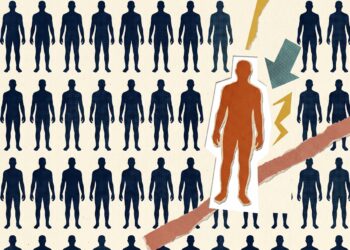
Picture an employee whose manager radiates confidence and paints grand visions, yet rarely explains how to reach them or how performance will be judged. The goals keep shifting. The praise feels conditional. Faced with this kind of ambiguity, what does that employee do to protect their standing? A new study suggests one possible answer: they may quietly start to cheat.
Writing in the Journal of Managerial Psychology, a team of researchers examined how leaders with narcissistic traits can, often without intending to, push their subordinates toward dishonest behavior at work. The link, they propose, runs through a feeling of uncertainty that such leaders tend to create.
The question behind the research
Narcissism, as the authors define it, describes someone with an inflated sense of self who constantly seeks to have that self-image reinforced. People with these traits often climb into leadership roles because they come across as bold and self-assured. Much existing research has explored both the upsides of narcissistic leaders, such as launching ambitious strategies, and the downsides, including mistreatment of the people who work for them.
Min Ju Oh of Seoul National University and colleagues, along with Jihye Lee of the Daegu-Gyeongbuk Institute of Science and Technology, wanted to look at something less examined: not just how these leaders damage relationships, but the kind of work environment they create. The researchers argue that narcissistic leaders are ambivalent figures. They can seem appealing and capable from a distance, but their bold visions frequently lack clear direction, and their self-centered focus can leave employees unsure whether their efforts will be recognized.
That combination, the authors propose, breeds uncertainty. And uncertainty, in turn, can prompt people to look out for themselves. The team built their predictions on what is called the self-protection model, an idea developed by earlier scholars holding that employees become more likely to cheat when they perceive threats to their interests. Cheating here means unethical acts meant to create an unfair advantage, such as misrepresenting work to look more productive or inflating hours.

How the study was built
The researchers ran two separate surveys in South Korea, both spaced out over time to reduce the chance that answers given at one moment would artificially shape later ones. Each survey collected data in three waves.
In the first study, 209 employees from various industries answered questions at two-week intervals. At the first point they rated their leader’s narcissism using statements like “He or she has been a very self-centered person.” Two weeks later they reported their sense of workplace uncertainty, responding to items such as “Many things seem unsettled at work currently,” along with how much autonomy they had in their jobs. In the final wave they reported their own cheating behavior, including whether they had “misrepresented work activity to make it look as though you have been productive.”
The second study used a different and arguably tougher design. Rather than asking employees to judge their bosses, the researchers had 151 executive-level leaders, drawn from an executive MBA program, rate their own narcissism. Their subordinates separately reported their feelings of uncertainty, their job autonomy, and their cheating. This pairing of leaders with their employees helped guard against the problem of one person’s answers driving the whole pattern.
Both studies measured job autonomy, meaning how much freedom employees felt they had in deciding how to do their work, using statements such as “I have significant autonomy in determining how I do my job.” The researchers also accounted for employees’ age, gender, education, and how long they had worked with their leader.
What the analysis found
The patterns lined up across both studies. Employees who described their leaders as more narcissistic reported higher levels of workplace uncertainty. That heightened uncertainty was, in turn, associated with more cheating. The researchers describe this as a chain: narcissistic leadership is linked to greater uncertainty, and greater uncertainty is linked to more dishonest behavior.
The connection held whether narcissism was rated by employees, as in the first study, or self-reported by leaders, as in the second. That consistency matters because the two methods have different weaknesses, and finding the same result both ways strengthens the case.
The most striking part of the findings involves job autonomy, which is usually treated as a workplace benefit tied to satisfaction and creativity. Here, autonomy appeared to work in the opposite direction. The link between uncertainty and cheating was strong among employees with high autonomy but essentially absent among those with low autonomy. In statistical terms, uncertainty predicted more cheating only when employees had a lot of freedom in how they worked.
The authors interpret this through the logic of opportunity. Cheating, in their view, needs both a trigger and a chance to act. Uncertainty supplies the trigger. Autonomy, by reducing oversight, supplies the opportunity. When both are present, the perceived rewards of cutting corners may outweigh the perceived risk of getting caught.
What it might mean for workplaces
The researchers offer several suggestions for organizations, though they frame these as ways to reduce the uncertainty that seems to drive the behavior rather than as proven fixes. They suggest encouraging written communication, such as email, over informal verbal directions, since documented goals give employees a stable reference point and reduce ambiguity. They also recommend training employees to seek feedback proactively, which can help clarify murky expectations.
On autonomy, the authors are careful not to argue against it. They note that freedom at work can fuel motivation and creativity. Their point is that it needs to be paired with accountability, such as clear behavioral standards and progress monitoring, so its benefits remain while its potential for misuse shrinks.
Caveats worth keeping in mind
A few limits deserve attention. Because the data is observational, it shows associations rather than proof that narcissistic leadership directly causes cheating. The studies measured these factors as they naturally occurred rather than manipulating them in an experiment.
Cheating was also self-reported in both studies, and people tend to underreport their own unethical acts. The researchers acknowledge this and suggest future work could use behavioral experiments to check the findings.
The cultural setting is another consideration. Both samples came from South Korea, which the authors describe as a society where employees tend to defer to authority and watch their leaders closely. Those dynamics may strengthen the effects observed here, and the researchers note that studies in other countries would help clarify whether the pattern travels.
The team frames their contribution as a shift in how we think about narcissistic leadership. The harm, they argue, does not only come from leaders mistreating people. It can also flow from the very traits that make these leaders seem impressive, such as overconfidence and bold vision, which can leave followers unsure of what is expected and reaching for self-protective shortcuts.