Sociology of Wealth
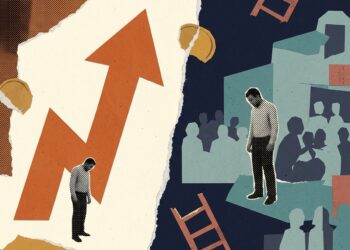
When a “good economy” feels worse: How economic optimism can deepen a sense of powerlessness
A study of American and Canadian workers finds that for people struggling with money, believing the economy is thriving is linked to feeling more powerless, not less.
Early career stability is linked to savings and homeownership, even after accounting for income
A UK study finds that a steady start in the labor market is linked to owning a home and building savings by age 32, and that family wealth tends to amplify those gains for people who already started...

Optimism about student loan forgiveness led to real spending shifts, new research finds
A new NBER working paper finds student loan borrowers who believed forgiveness was coming paid less on their loans and spent more elsewhere — and those who bet wrong on the payment pause were more likely to end...

Marriage affects women’s business ownership differently across cultures
A study of more than 142,000 people finds that marriage widens the gender gap in self-employment most in cultures comfortable with risk-taking, and barely adds to it in cultures that prize predictability.

A woman’s layoff delays a first child, a man’s delays the second, study finds
A Norwegian study of plant closures finds job loss reshapes family plans in gendered ways: a woman's layoff delays first births, while a man's layoff cuts the odds of a second child.

The surprising difference between how couples handle equal income versus equal wealth
A study of nearly 14,300 German couples finds that income equality is linked to separate finances mainly in the West, while wealth equality pushes couples toward pooling in both regions.

Shareholder support for women directors shrinks in religious and conservative corporate hometowns
A study of 57,000 U.S. director elections finds that women nominees generally get stronger shareholder support than men, but that advantage shrinks in counties with higher religiosity, more Republican voters, and denser social networks.

When housing booms lift spending, only landlords seem to notice
A study of Korean household data finds that rising home prices boost consumption almost exclusively among multi-property owners, while renters and single-home owners show little or slightly negative responses.

A gap in financial honesty may matter more than the amount hidden
New research finds that when one partner hides money and the other stays open, the gap between them predicts lower savings and less relationship satisfaction, more reliably than the total amount of secrecy in the marriage.

Gold, gifts, and getting married: A new look at how commodity prices shape marriage timing
A new study finds that when gold prices rise faster in China, first-time marriage registrations also grow faster, suggesting couples move up wedding plans to avoid paying more later.