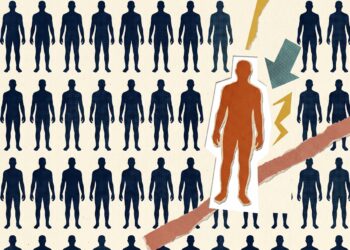
Picture yourself in a meeting with a senior executive who speaks in rapid-fire bursts. Without even realizing it, you might find yourself talking faster too, matching their pace. Now imagine the same executive talking with a junior employee who draws out every syllable. Would the executive slow down? A new investigation suggests the answer depends on where you sit in the hierarchy, and that people with less power are especially likely to speed up when talking with someone whose quick speech signals authority.
The research, published in the Journal of Applied Social Psychology, looked at how people in different power positions adjust the tempo of their speech when interacting with partners who speak at different speeds. The central finding: low-power participants converged toward fast-speaking partners more than anyone else in the study.
The question behind the experiment
Phebe Driebergen and Marianne Schmid Mast, both at the Faculty of Business and Economics at the University of Lausanne, wanted to understand something researchers call behavioral adaptability. The term refers to a person’s ability to shift their social behavior, both what they say and how they say it, depending on who they are talking to.
Most earlier work on this topic examined people already holding authority, such as doctors adjusting to patients or managers adjusting to employees. Very little had been done on how people across different levels of power behave. Driebergen and Schmid Mast wanted to know whether someone’s position in a hierarchy affects how much they modify their speech to match a conversation partner.
Their reasoning drew on a framework called Communication Accommodation Theory, which holds that people adjust their speech patterns, such as accent, pitch, or speaking speed, to manage social distance, gain approval, or communicate more effectively. The theory predicts that lower-status individuals have more motivation to accommodate higher-status ones, since they tend to depend on them more.

Setting up the scenario
Across two online experiments with a combined 662 adult participants from the United Kingdom, the researchers built a simulated workplace values workshop. Participants were recruited through the platform Prolific, were fluent English speakers, and had jobs requiring regular interaction with coworkers.
Each person was randomly assigned to one of three roles: a Director (high power), a Manager (equal power among peers), or an Employee (low power). An organizational chart reinforced the assigned position. Participants were asked to rank a list of workplace values and then record themselves explaining their top three choices. This recording served as their baseline, giving the researchers a sample of each person’s natural speaking tempo.
Participants then listened to audio clips from four pre-selected “coworkers” named Laura, Ash, Alan, and Jesse. Two of these targets spoke quickly, and two spoke slowly. Each target shared their own top values, and after each clip, the participant recorded a response. In total, each person completed 11 interactions.
Measuring tempo shifts
To gauge adaptation, the researchers focused on articulation rate, meaning the number of syllables a person speaks per second, excluding pauses. Articulation rate is considered a relatively spontaneous, hard-to-fake aspect of speech, which makes it a useful signal of unconscious adjustment.
For each interaction, the team compared a participant’s baseline rate to the target’s rate, then checked whether the participant’s response moved toward the target’s tempo. Movement toward the target counted as adaptation; no change or movement away counted as non-adaptation. Interactions where the baseline rates were too similar to produce a meaningful comparison were dropped from the analysis.
When the researchers analyzed the results using statistical models that accounted for individual differences among participants and targets, something unexpected emerged. Power position alone did not predict how much people adapted their speech. The simple prediction, that low-power individuals would adapt more across the board, was not supported.
What did show up was a more specific pattern. Low-power participants adapted significantly more when their partner was a fast speaker compared to a slow one, a difference of roughly 12 percentage points in predicted probability. Participants in the equal-power and high-power conditions showed no such selectivity. They adapted at similar rates whether their partner spoke quickly or slowly.
Why fast speech seems to matter
To understand why speaking speed made a difference, the researchers ran a follow-up study with 101 new participants. These listeners rated the same target audio clips on qualities such as status, power, competence, warmth, and where the speaker fell on an organizational ladder.
The fast-speaking targets were rated higher on positive attributes and were placed higher on the organizational hierarchy than the slow speakers. In other words, quick speech was implicitly read as a marker of authority and rank. This helps explain the main finding: low-power participants may have been particularly inclined to match the speech patterns of those who, through tempo alone, seemed to signal higher standing.
What this could mean at work
For managers and organizations, the findings point to a few practical considerations. Speech tempo appears to shape perceptions of competence and authority in ways people may not consciously register. A fast-talking candidate in a job interview, for instance, might be perceived as more capable even if actual qualifications are similar to a slower-speaking peer. The authors suggest that structured interviews and awareness training could help reduce this kind of unconscious bias.
For employees, the results show that speech patterns themselves can reinforce hierarchy in subtle ways. People lower in rank may find themselves accommodating not because of what is being said, but because of how quickly it is being said.
Some caveats are worth noting. The experiments took place online with imagined workplace roles rather than real ones with real consequences. The study examined only one dimension of speech, articulation rate, leaving pitch, volume, and body language for future work. And because participants only interacted with pre-recorded audio, the research cannot capture the back-and-forth dynamics of live conversation. Still, the pattern the researchers found suggests that small, largely automatic adjustments in how we speak may be shaped by the invisible architecture of power around us.